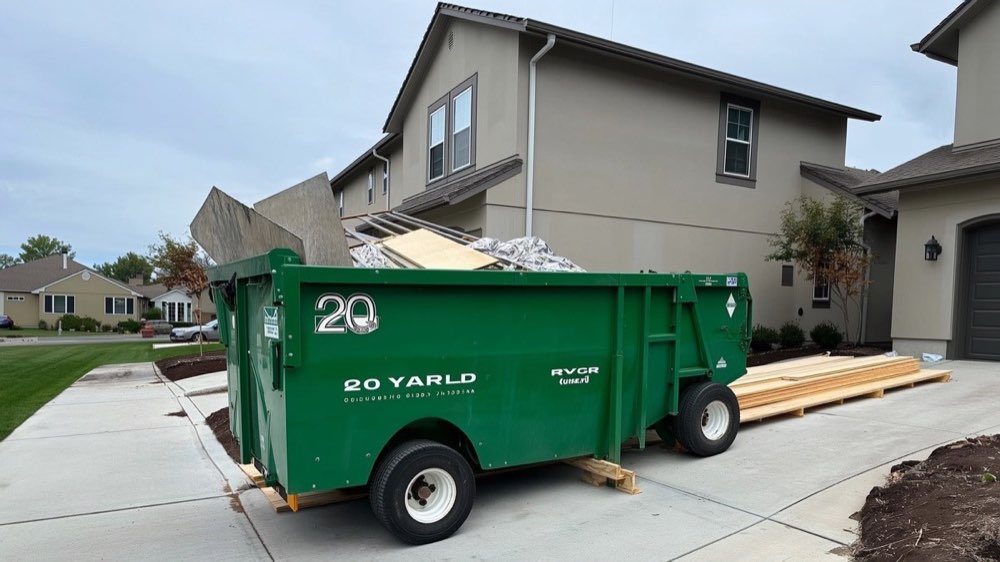
A North Shore bungalow remodel or a Hixson kitchen leaves the same pile: old cabinets, tile, deck boards, fence panels, shingles. The crew takes it away in a single trip so your contractor keeps moving and the driveway stays open, or drops a container that stays for the whole job.
Brick, concrete and dirt go by the ton, so tell us what is in the pile and the first quote is the real one.
What a construction and renovation debris removal job involves
- Photo or a list of what is in the pile; price includes the facility fee
- Collected from the driveway, inside the garage or on the job site
- Metal and clean cardboard split out for recycling where the facility accepts them
- Site left clear for the next trade
What's included
- Loading from the driveway, the garage or the site
- Disposal at the construction and demolition facility
- Separation of metal and clean cardboard for recycling
- A quote split into light material by volume and heavy material by weight
- The site left clear for the next trade
What needs someone else first
- Asbestos, lead paint chips and other regulated materials, which an abatement contractor has to handle first
- Demolition itself, unless it is a shed, a hot tub, a fence or a playset
- Liquids, fuel, paint and chemicals
Renovation cleanup for Chattanooga remodels
Renovation debris is the one pile the city will not touch at the curb. Building materials, lumber, drywall, tile, brick, concrete and dirt are all on the brush and bulk program's refused list, and the city landfill on Birchwood Pike does not accept construction and demolition waste either. That leaves the private construction and demolition site next to it, which charges by weight, and a construction waste removal crew or a dumpster to get the pile there.
The houses being opened up here are old enough to matter. A North Shore or Riverview bungalow from the 1920s comes apart into plaster and lath, heart pine and cast iron, and the plaster alone weighs more than the same volume of new drywall. The 1950s ranches in Brainerd and East Ridge shed asbestos-era floor tile in some cases, which is a job for an abatement contractor first and a hauling job second. The crew asks what year the house is before quoting a gut.
Deck boards, fence panels and roofing come off in one piece and go out in one trip from the driveway; a full kitchen or bathroom demolition is usually better served by a container for the length of the job, and the crew will say which is cheaper rather than sell the truck.
Construction and Renovation Debris Removal pricing in Chattanooga
Light debris such as drywall scraps, cabinet boxes, trim and decking is priced by volume like any other load: about $240 to $325 for a quarter truck, $375 to $490 for a half, $650 to $800 for a full truck, disposal included. Heavy material is the exception. Concrete, brick, tile, dirt and shingles are billed by weight because the facility charges by the ton, and a small pile of tile can cost more than a big pile of cardboard.
A photo of the pile with a note on what is in it gets the quote right the first time. Mixed loads are quoted as two parts, the light part by volume and the heavy part by weight.
Full price list and what moves the price →
Related: Bulk Trash Pickup in Chattanooga: What the City Takes and What It Won't, Junk removal in Hixson, Junk removal in Ooltewah. Official page: City of Chattanooga.
Construction and Renovation Debris Removal questions, answered
Is construction debris priced by weight or by volume?
Both, depending on what it is. Drywall, cabinets, trim, decking and packaging are light and go by how much of the truck they fill. Concrete, brick, block, tile, dirt and roofing shingles are heavy and go by the ton, because that is how the construction and demolition facility charges. A mixed pile is quoted in two parts so neither side is guessed.
Will Chattanooga's brush and bulk route take renovation debris?
No. The city's brush and bulk collection refuses building materials, lumber, drywall, tile, brick, concrete and dirt, and the city landfill does not take construction and demolition waste from residents. Renovation debris has to go to a private facility by truck or by dumpster.
Do you haul from an active job site?
Yes. The crew picks up from the driveway, the garage or the site itself, and works around the trades already there. For a job that produces debris every day for a week or more, a dumpster on site usually costs less than repeated truck visits, and the crew will tell you so.